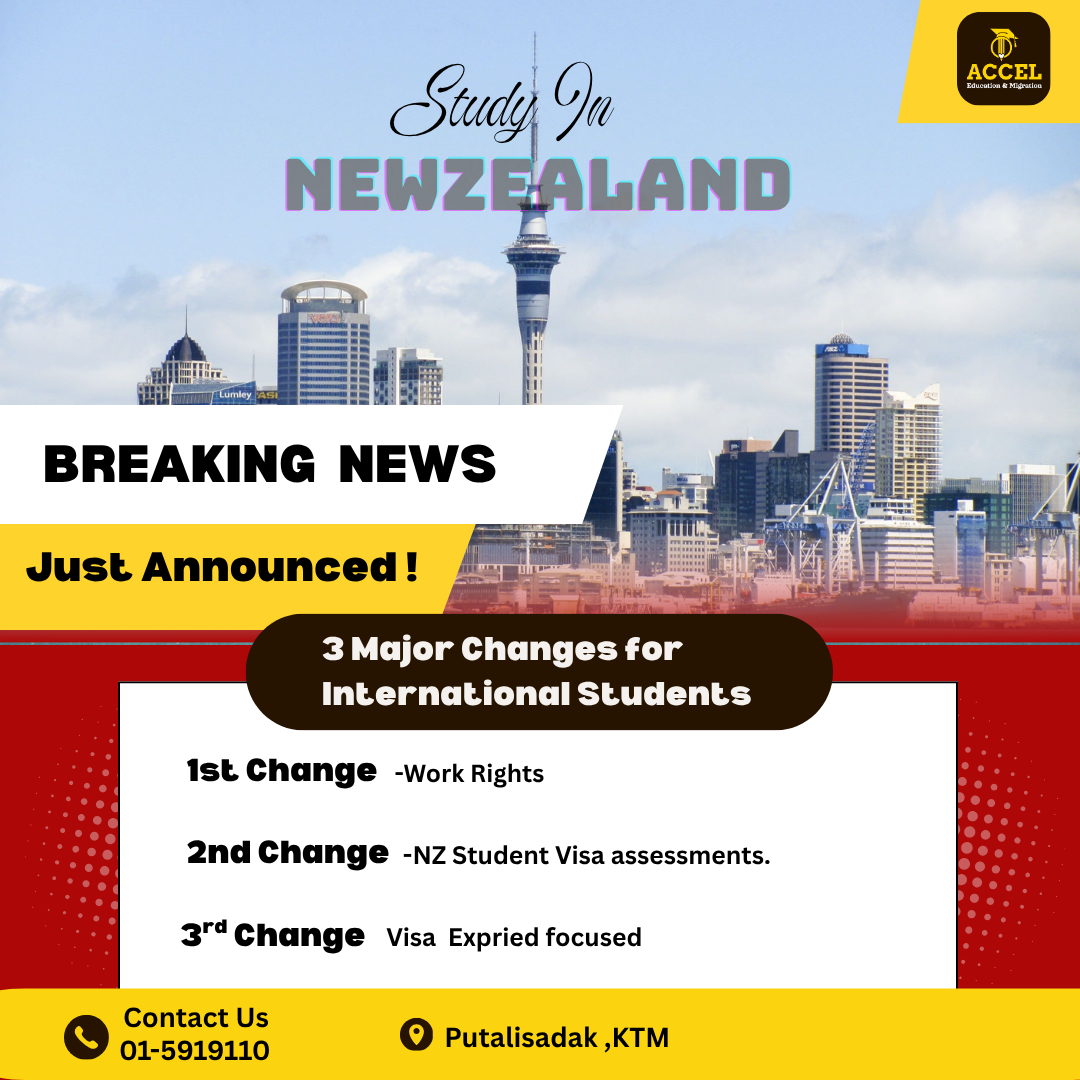
Are you planning to study in New Zealand in 2026? Before choosing your university or applying for a student visa, it is important to understand the latest immigration changes that could affect your study plans.
New Zealand remains an option for international students seeking quality education and international exposure. However, students should understand the rules regarding part-time work, English language proficiency and the duration of their student visa before making a financial commitment.
On 27 October 2026, Immigration New Zealand announced important changes affecting student visa work rights, the assessment of English language ability and the period students may have after completing their courses. These changes are particularly important for students preparing their applications and those already studying in New Zealand.
Let’s explore the three key updates in simple language.
1. New Zealand Student Work Hours: Up to 25 Hours Per Week
One of the most important updates for international students concerns part-time work rights.
From 3 November 2025, eligible student visa holders became able to work up to 25 hours per week during their studies, compared with the previous limit of 20 hours. This remains an important rule for eligible students in 2026.
What does this mean for students?
Students who meet the eligibility criteria may work part-time while continuing their studies. This can help them gain international work experience and contribute towards their living expenses.
However, students should not assume that part-time employment will cover all their tuition fees and living costs. Finding a job depends on factors such as location, English communication skills, availability of vacancies, class schedules and relevant experience.
Can students work full-time during holidays?
Some eligible students can work full-time during scheduled study breaks and the Christmas and New Year holiday period. Eligibility depends on the course and the conditions specified on the student visa.
Students must check their own eVisa or visa approval letter before accepting additional working hours.
Important change for master’s students
As announced on 27 October 2026, new student visa rules remove the unlimited in-study work rights previously available to master’s-by-research students. Master’s students are now subject to the same standard work conditions as most other eligible students: up to 25 hours per week during study and full-time work during qualifying holidays.
This means students considering postgraduate study should check the latest conditions rather than relying on older advice about unlimited working hours.
Key takeaway: The 25-hour limit is not automatic for every student. Your course eligibility and individual visa conditions determine whether you can work.
2. English Language Proficiency: An Important Part of Student Visa Assessment
English proficiency is another important consideration for students planning to study in New Zealand.
Students often focus on IELTS, PTE Academic or other English language tests when choosing a course. However, it is important to understand the difference between an institution’s admission requirements and Immigration New Zealand’s visa assessment.
What is the latest update?
On 27 October 2026, Immigration New Zealand strengthened its instructions to make clear that English language ability is a key factor in determining whether a student can meet their student visa conditions.
In practical terms, students should be prepared to demonstrate that they have the English skills needed for their proposed studies and can understand and follow the conditions attached to their visa.
This does not mean that Immigration New Zealand has introduced one universal IELTS score for every international student. English test requirements can differ according to the course, qualification, education provider and relevant visa rules.
Which English test should you take?
Depending on the institution and programme, students may be able to use an accepted English language test such as:
- IELTS Academic
- PTE Academic
- Other English language evidence accepted by the institution and applicable requirements
Before booking an examination, students should confirm which tests are accepted, the required scores, the minimum scores for individual skills and the validity period of their results.
For example, an institution may require a particular overall IELTS score as well as minimum scores in listening, reading, writing and speaking. Another programme may have different requirements.
What should students do before applying?
First, choose a course that matches your academic background and future goals. Then, check the institution’s current English requirements and prepare the appropriate test result or other accepted evidence.
Students should also be ready to explain their course choice, academic plans and reasons for studying in New Zealand clearly and consistently.
Meeting an English test requirement does not automatically guarantee a student visa. Immigration New Zealand considers the application as a whole.
Key takeaway: Do not choose a course based only on a low English score requirement. Confirm the institution’s current admission criteria and prepare for the English level needed to succeed in your studies.
3. New Zealand Student Visa Expiry: More Time After Course Completion
The third important update concerns the expiry date of student visas.
Previously, depending on the course and the length of study, a student visa could expire one month after the course end date or on 31 March, where that date applied under the relevant rules.
Immigration New Zealand announced on 27 October 2026 that it would extend the applicable period after the course end date from one month to two months, giving eligible students more time to decide their next step.
The 31 March date remains unchanged where it applies.
What does the two-month period mean?
The change is intended to provide eligible students with additional time after completing their studies to consider their next steps.
For example, a student may need time to organise departure arrangements, prepare for graduation or explore whether they qualify for another visa.
However, students must understand that the additional period is not a new work visa, a guaranteed pathway to employment or an automatic extension of every student visa.
The actual expiry date depends on the applicable rules and the conditions of the student’s visa.
Can students stay in New Zealand after their student visa expires?
Students cannot simply remain in New Zealand after their visa expires because they have completed their studies.
Anyone wishing to remain longer must hold a valid visa that permits their stay. Depending on their circumstances, they may be able to apply for another appropriate visa before their current visa expires.
Eligible graduates may also explore a Post Study Work Visa, but eligibility depends on the qualification completed, the study undertaken and the applicable immigration requirements.
Students should not assume that every course provides post-study work rights.
What should students do?
Check the expiry date on your eVisa or visa approval letter. If you plan to remain in New Zealand after your course, research your next visa option early and make sure you meet its requirements.
Do not wait until the last few days of your visa to make arrangements.
Key takeaway: The new two-month period applies under the relevant rules; it does not automatically give every student two additional months or guarantee permission to work after graduation.
Quick Comparison: Three New Zealand Student Visa Updates
| Topic | Key update | What students should remember |
|---|---|---|
| Student work hours | Up to 25 hours per week for eligible students | Check your course eligibility and visa conditions |
| English proficiency | English ability is explicitly highlighted in visa-condition assessment | Meet the requirements relevant to your course and visa |
| Visa expiry | Applicable post-course period extended from one month to two months | Check your actual visa expiry date and plan your next step |
Is New Zealand a Good Choice for Students in 2026?
New Zealand may be suitable for students seeking recognised qualifications, a supportive learning environment and opportunities to gain international experience.
However, the right destination depends on more than work hours or visa duration. Students should consider tuition fees, living expenses, academic eligibility, English proficiency, career opportunities and their long-term goals.
Before applying, ask yourself:
- Does this course match my academic background and career plans?
- Can I afford tuition fees and living expenses without depending entirely on part-time employment?
- Do I meet the institution’s English language requirements?
- Do I understand my student visa conditions?
- Have I checked whether my intended qualification offers a post-study work pathway?
Careful preparation can help students make more informed decisions and avoid unnecessary financial pressure.
Final Thoughts
The latest New Zealand student visa changes announced on 27 October 2026 highlight three areas students should understand before applying: work rights, English language ability and visa expiry after course completion.
For students, the most important step is to verify the latest official requirements before selecting a course or submitting an application. Immigration rules, education-provider requirements and individual visa conditions may differ.
At ACCEL, students can seek guidance on course selection, admission requirements, English language preparation and the student visa application process so they can plan their study-abroad journey with better information and realistic expectations with us and for more detail you can call us @015919110 or visit us @ Putalisadak, Kathmandu.
Planning to study in New Zealand? Get your eligibility assessed, understand your course options and prepare your application carefully before making a decision.
Frequently Asked Questions (FAQs)
1. How many hours can international students work in New Zealand in 2026?
Eligible student visa holders may work up to 25 hours per week during their studies. The exact permission depends on the course and visa conditions.
2. Is IELTS compulsory for every New Zealand student visa applicant?
Not necessarily. English requirements depend on the institution, programme and applicable visa rules. Applicants should confirm which tests or other evidence are accepted for their circumstances.
3. Has New Zealand introduced a new universal IELTS score in October 2026?
The 27 October announcement highlights English language ability in the assessment of student visa conditions. It does not establish one universal IELTS score for all student visa applicants.
4. Do students now get two months after completing their course?
Immigration New Zealand announced an extension from one month to two months for the applicable post-course visa period. The 31 March date remains unchanged where it applies, so students must check their individual visa conditions.
5. Can students automatically get a work visa after graduation?
No. A post-study work visa is subject to eligibility requirements, including the qualification and study completed. Students should check the official rules before choosing a course based on post-study work opportunities.