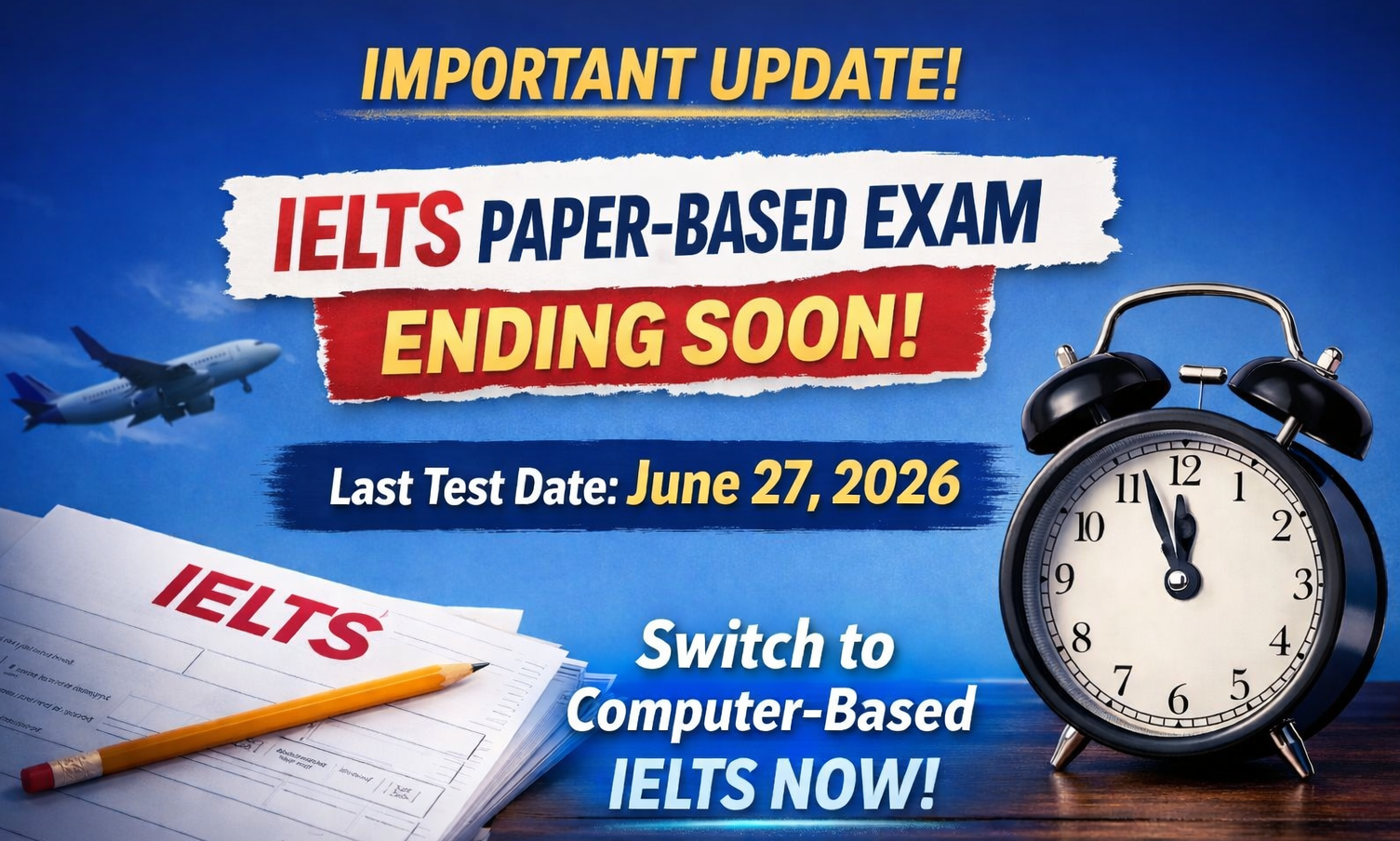
For many years, students around the world have relied on the traditional paper-based IELTS exam to demonstrate their English proficiency for studying, working, or migrating abroad. However, an important change is coming.
According to updates from organizations like British Council and IDP Education, the paper-based IELTS test will officially be discontinued after June 27, 2026. This means students will gradually need to shift towards the computer-delivered IELTS format for their future test bookings.
This change marks a significant transition in the way English proficiency tests are conducted world wide. But what does this mean for students planning to take the test? Let’s explore everything you need to know.
Why Is the IELTS Paper-Based Test Being Discontinued ?
The main reason behind discontinuing the paper-based test is the global shift toward digital testing systems. Computer-based exams allow test providers to deliver results faster, manage test scheduling more efficiently, and provide a smoother experience for candidates.
Organizations such as IELTS have already expanded computer-based testing in many countries because it offers several advantages:
- Faster result processing
- More test dates available each month
- Better test security
- A modern and efficient testing environment
As digital learning and testing continue to grow, the transition to computer-based exams is becoming a natural step forward.
What Is the Computer-Delivered IELTS Test ?
The computer-delivered IELTS test follows the same format and structure as the traditional exam. Students will still complete the four main sections:
- Listening
- Reading
- Writing
- Speaking
The only difference is that the Reading, Listening, and Writing sections are completed on a computer, while the Speaking test is still conducted face-to-face with an examiner.
This means students will continue to experience the same evaluation standards used by IELTS worldwide.
Benefits of Computer-Based IELTS for Students
Although some students feel comfortable with pen-and-paper exams, the computer-based test actually offers several benefits.
1. Faster Results
One of the biggest advantages is that results are usually available within 3–5 days, compared to around 13 days for the paper-based exam.
2. More Flexible Test Dates
Computer-based tests are available multiple times per week, giving students greater flexibility when planning their exam schedule.
3. Easier Editing in Writing Tasks
Students can easily edit, delete, and rearrange their answers, which can help improve writing accuracy.
4. Better Time Management
On-screen timers help candidates manage their time effectively during the test.
Should Students Be Worried About This Change ?
Not at all. The computer-delivered IELTS test is designed to maintain the same difficulty level, scoring system, and assessment criteria as the traditional paper-based version.
Students who are familiar with typing and basic computer skills often find the digital format more convenient and efficient.
In fact, many international test centers have already transitioned primarily to the computer-based format due to its popularity among candidates.
How Students Can Prepare for Computer-Based IELTS ?
Adapting to the new format is easier than most students expect. Here are a few helpful preparation tips:
Practice Typing
Students should practice typing their essays to become comfortable completing writing tasks within the time limit.
Take Computer-Based Mock Tests
Practicing online mock exams helps students understand the test interface and improve confidence.
Focus on Time Management
Using online IELTS practice tools can help students learn how to manage time efficiently during each section.
Familiarize Yourself with the Test Format
Understanding how the screen layout works for listening, reading, and writing tasks can reduce stress on exam day.
The Future of IELTS Testing
The shift toward computer-based exams reflects the broader trend in global education and assessment systems. With improved technology and faster result delivery, digital exams are becoming the preferred choice for many students.
Organizations such as Cambridge Assessment English, which co-owns the IELTS test, continue to update the testing system to ensure accuracy, fairness, and convenience for candidates worldwide.
For students planning to study abroad, adapting to digital testing formats will soon become the standard.
Final Thoughts
The discontinuation of the IELTS paper-based test after June 27 represents an important step toward modernizing English language testing. While the change may feel unfamiliar at first, the computer-based IELTS format provides faster results, more flexibility, and a smoother testing experience.
Students preparing for their English proficiency test should begin practicing with computer-based mock exams and familiarize themselves with the digital test environment.
With the right preparation and mindset, this transition can become an opportunity rather than a challenge.
Beside it, If you want to be enroll in our services like IELTS, PTE, TOEFL classes or if want to know in detail about your desired country , visit ACCEL EDUCATION AND MIGRATION SERVICES, where we will guide you step to step and help to take the right decision for your futuure.